Eagan Lake Water Quality | Tracking the Success of Local Cleanup Efforts | South Metro Scoop
Five lakes. That's how many water bodies Eagan has successfully cleaned up and removed from Minnesota's official "impaired waters" list - and this spring, the city hits zero impaired lakes for the first time.
When Carlson Lake and Holes Lake officially come off the list, Eagan will have no impaired water bodies across its entire 1,300+ lake system. That caps a 30-year effort that most Minnesota cities can only dream about pulling off.
Here's the thing - Eagan didn't just get lucky with good water quality. The city has been aggressively monitoring and managing its 1,300+ water bodies since 1990, collecting samples twice a month every summer and investing in treatment systems that actually work.
Water Resources Manager Jenna Olson laid it all out for Eagan's Parks and Recreation Commission in January, and the data tells a success story you don't usually see in environmental management.
The Timeline That Actually Matters
Fish Lake was the first to come off the impaired list back in 2014, achieving about a 19% phosphorus reduction after sustained restoration work.
Then came the big year - 2022. Both LeMay Lake and Fitz Lake were removed from the impaired waters list after years of aggressive management. That was right after Olson took over the program from Eric Macbeth, who ran water quality for Eagan for 23 years before retiring.
Now Carlson and Holes are joining them pending final approval from the EPA and Minnesota Pollution Control Agency this spring.
Think about that. Most cities struggle to fix even one impaired lake. Eagan's about to have zero.
What "Impaired" Actually Means
When the state labels a lake "impaired," they're looking at three main things: chlorophyll levels (algae), total phosphorus (the nutrient that feeds algae), and water clarity.
Eagan saw its lakes take a hit in the early 2000s when the city went through massive development. Between 1990 and 2000, impervious surfaces - that's roads, parking lots, roofs, anything water can't soak into - jumped dramatically. All that runoff had nowhere to go except the lakes.
But here's where Eagan's 30-year data set becomes incredibly valuable. The city could see exactly when water quality started declining and track which management strategies actually worked to reverse it.
The results? Chlorophyll levels that spiked around 2006 have been steadily dropping. Phosphorus levels show the same trend. Water clarity that bottomed out in the early 2000s is improving.
How They Actually Fixed It
Olson broke down the city's approach into four categories - and this is where your tax dollars have been working:
Constructed treatment systems: Think street-side rain gardens, underground filtration systems, detention basins. Engineered infrastructure that catches stormwater before it hits the lakes.
In-lake treatments: Eagan uses aluminum sulfate applications in strategic lakes. The chemical binds to phosphorus in the water and sinks it to the bottom where plants can't access it. Less available nutrients means less algae growth.
Invasive species control: The city runs an aquatic weed harvester - basically a giant floating lawnmower - on Fish Lake, Blackhawk Lake, Thomas Lake, and Schwans Lake. They also contract with companies to hand-pull invasive flowering rush and yellow iris along shorelines.
And yes, they have to deal with goldfish. People dump their aquarium fish thinking they're being humane, but goldfish wreck water quality and have no natural predators. Olson's team has had to electroshock them out of lakes. Her quote: "I have personally done that - it is straight up not a good time."
Fisheries management: The city stocks desirable game fish (walleye, largemouth bass, crappie) and manages populations to keep ecosystems balanced. This year they stocked largemouth bass and moved fish between lakes to spread out fishing pressure.
Eagan maintains aeration systems in 13 lakes to keep dissolved oxygen levels high enough for fish to survive winter.
What You're Getting Next: Better Fishing Access
Clean water matters, but Eagan isn't stopping there. The city just completed a new fishing pier at Moonshine Park on Lame Lake - it'll be ready for programming this spring.
Fun detail: Lame Lake is packed with big fish. When DNR staff did overnight population surveys two summers ago, they told city staff "there's some really big fish here." That conversation led directly to the pier project.
And here's something practical - Eagan's piloting free tackle box stands at Lame Lake this year. Think Little Free Libraries, but stocked with fishing gear. If you want to try fishing but don't want to buy all the equipment first, you'll be able to grab what you need for free.
The city identified gaps in fishing infrastructure around areas with the highest density of rental properties and multi-family units. The Moonshine Park pier fills one of those gaps.
More piers are planned for Cliff Lake and Bur Oaks Pond - both have robust fish populations but limited shoreline access.
The Cliff Lake Surprise
Olson called Cliff Lake "mommy's perfect angel" during her presentation, and honestly, the description fits.
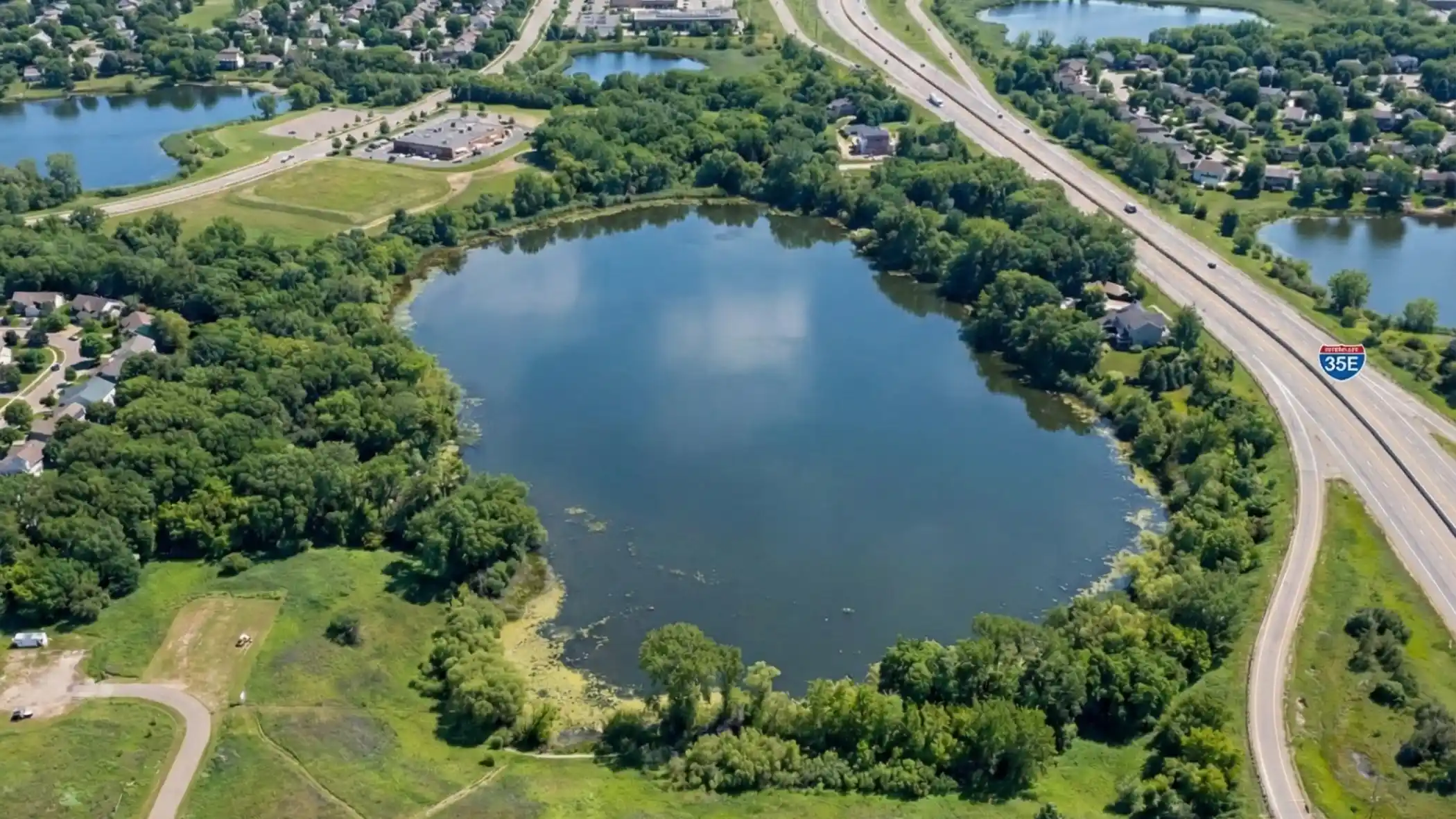
The lake sits between 35E and a strip mall - not exactly prime waterfront real estate. But it consistently shows great dissolved oxygen levels, excellent nutrient levels, and incredible fish. The city pulls 20+ inch bass out of it during population surveys.
No, really. A sketchy-looking lake sandwiched between a highway and shopping center outperforms lakes in much nicer settings.
What's Still Challenging
Eagan's water quality team can't rest now that the lakes are cleaned up. Climate change is making their job harder.
Shorter winters with less ice cover mean sunlight penetrates lakes all winter. Plants photosynthesize under the ice and hit the ground running in spring, leading to heavy growth by summer. Hotter summers proliferate even more plant growth.
The city also monitors for chloride pollution - road salt is becoming a bigger threat every year - and invasive species continue spreading as climate conditions shift.
Olson's team tracks all of it with that 30-year data set showing exactly what works and what doesn't.
The Bigger Picture
Eagan residents ranked parks and the natural environment as top priorities in the latest community survey. The city has 1,300+ water bodies across 34 square miles - that's a lot of water even by Minnesota standards.
About 70% of the city is now developed area. Protecting water quality in that environment takes constant, aggressive management.
But here's what the numbers prove: long-term investment works. Even when it takes 30 years. And when you get to zero impaired lakes across an entire city system - that's the kind of win most environmental programs never achieve.
The city's annual Lake Fest events will continue with improved educational programming. ADA improvements are planned for existing fishing piers. Translated versions of the neighborhood fishing guide are coming to improve equity and access across the community.
Want updates onEaganparks, water quality, and recreation projects? Sign up for South Metro Scoop and get local news every Monday and Thursday. We cover city council decisions across Dakota County so you actually know what's happening in your backyard.
Check out more local news on our blog, or browse all our Eagan coverage to stay informed on development, schools, and community decisions.
Got questions about Eagan's water quality program? Contact us - we read every message.